Tesla Model 3 Window Tint: What First-Time Owners Know
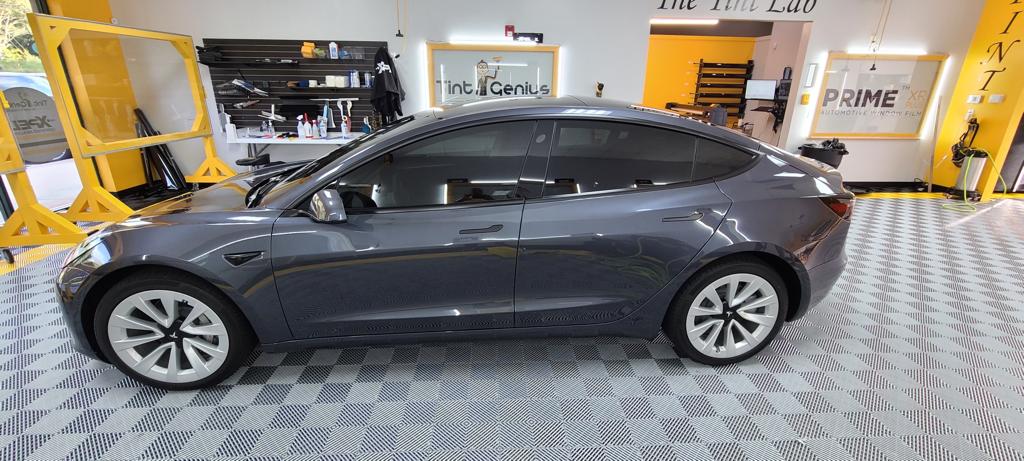
If this is your first Tesla Model 3, choosing window tint involves more than deciding how dark you want the glass to look. Film technology, heat control, UV protection, legal limits, the Model 3’s rear glass, and proper aftercare all deserve consideration. At Tint Genius, we provide Tesla Model 3 window tint services in McDonough, including options for the windows, roof, and windshield where appropriate.
For a first-time owner, the most useful approach is to start with what you want the film to accomplish. Some drivers prioritize cabin comfort, others want UV protection or a particular appearance, and many want a combination of these benefits. The right Tesla window tint should balance those priorities with Georgia law and the design of the vehicle.
Why Tesla Model 3 Window Tint Requires Careful Planning
The Model 3 has distinctive glass areas, which makes coverage an important part of the decision. Tint Genius specifically offers tinting for Model 3 windows, the roof, and the windshield, and our Tesla service information identifies the Model 3 rear window as one of the more challenging areas to tint properly. We handle that rear window in a single seamless piece.
That matters because professional tinting is not simply a matter of applying film to any piece of glass. Window size, shape, curvature, access, existing glass characteristics, and the selected coverage can all affect the installation.
For first-time Tesla owners, it helps to discuss the entire vehicle rather than making a film decision one window at a time.
Start With Film Performance, Not Just Darkness
One of the most common misconceptions about automotive tint is that darker automatically means better heat protection. Film darkness and film performance are separate considerations.
Tint Genius is an XPEL Certified Dealer and offers the XPEL PRIME window film lineup, including PRIME CS, PRIME XR, and PRIME XR Plus options.
XPEL currently describes PRIME CS as its color-stable option, while PRIME XR and XR Plus provide higher-performing heat-control technology. The manufacturer’s current information also states that the PRIME lineup blocks 99% of harmful UV rays, while the available product levels differ substantially in infrared energy rejection.
That gives a Model 3 owner several questions to consider:
- How important is heat rejection during everyday driving?
- Is UV protection a major priority?
- Do you mainly want a darker or more uniform appearance?
- Which windows do you want treated?
- What shade works with current Georgia requirements?
- How much do you value the additional performance of a ceramic film?
We can help compare those priorities before you select the film.
Understand What Ceramic Window Tint Changes
Ceramic window tint is often appealing to Tesla owners because it can provide strong heat-control performance without requiring the darkest available shade.
XPEL identifies PRIME XR as a ceramic film option and PRIME XR Plus as the higher-performing level within its current PRIME lineup. Its published specifications show that heat-related performance varies by product, so buyers should compare actual film specifications instead of choosing solely by shade.
This distinction is especially useful for drivers who want more cabin comfort without automatically choosing the darkest-looking film.
Window tint can help reduce heat buildup, glare, and UV exposure, but it does not eliminate all solar heat or glare. Results also depend on the specific product, selected shade, glass, and coverage.
Think About the Model 3 Rear Glass Before Installation
The Model 3 rear glass deserves particular attention because of its size and design.
We tackle the challenging Model 3 rear window in one seamless piece. This allows a first-time owner to discuss rear-glass coverage as part of the complete tint plan instead of treating it as an ordinary rear window.
When comparing installers, ask how they approach the Model 3 specifically. Experience with conventional sedans does not automatically tell you how an installer handles larger or more specialized glass sections.
The finished appearance depends on more than the film itself. Fit, pattern preparation, installation technique, glass condition, and installer familiarity with the vehicle all matter.
Know Georgia’s Updated Window Tint Rules
Georgia’s window tint law changed effective July 1, 2026, so first-time Model 3 owners should be careful with older tint charts that still show the previous limits.
Under the law currently in effect, material applied to the front side or door windows generally cannot reduce light transmission below 28%, plus or minus 3%. Material on the rear windshield and rear side or door windows generally cannot reduce light transmission below 15%, plus or minus 3%. The law also restricts light reflectance to no more than 20% for those regulated applications.
Georgia law continues to restrict material applied to the front windshield when it reduces light transmission. Exceptions and vehicle-specific provisions can apply, so windshield tint should never be selected simply because a shade is available for purchase.
These requirements were verified on August 14, 2026, using Georgia’s signed HB 1161. The tint-law amendments became effective July 1, 2026.
This information is educational, not legal advice. When choosing Tesla Model 3 window tint in Georgia, confirm that your planned film and coverage are appropriate for the specific windows on your vehicle.
Decide Which Glass Areas Matter Most to You
Not every owner needs exactly the same tint setup.
Tint Genius lists Model 3 window, roof, and windshield tinting among its Tesla services. That allows the conversation to start with your driving experience instead of assuming every piece of glass needs identical treatment.
For example, one owner may be primarily concerned about side-window exposure during a daily commute. Another may want to discuss the roof and larger glass areas because cabin comfort is the main priority.
The goal should be a coordinated plan that considers film performance, appearance, visibility, legal requirements, and the sections of glass that affect you most.
Know What to Expect After Your XPEL Tint Is Installed
Fresh window film needs time to settle.
XPEL’s current care instructions explain that newly installed PRIME automotive window film can temporarily appear hazy or show moisture bubbles while the installation moisture dries. The manufacturer notes that these conditions may remain visible for up to ten days.
XPEL also advises waiting approximately one to five days before rolling down or cleaning freshly tinted windows, depending on climate and installation conditions. For cleaning, it recommends a microfiber towel slightly dampened with water and, when needed, a mild non-ammonia glass cleaner. Abrasive materials should be avoided.
Always follow the instructions provided for your specific installation rather than assuming that every tint product has identical aftercare requirements.
Common First-Time Tinting Mistakes to Avoid
The first mistake is choosing only by shade. A dark film does not automatically provide the same heat-control technology as a higher-performing ceramic film.
Another mistake is assuming the same shade can legally be used on every piece of glass. Georgia distinguishes among window locations, and the state’s requirements were revised in 2026.
It is also important not to judge a fresh installation immediately. Temporary installation moisture can affect appearance while the film dries.
Finally, do not overlook vehicle-specific installation experience. The Model 3 rear glass presents different considerations from a small, conventional rear window, which is why installer familiarity with Teslas is worth discussing before the appointment.
Frequently Asked Questions About Tesla Model 3 Window Tint
Is ceramic tint worth considering for a Tesla Model 3?
It can be a good option when heat control is an important priority. XPEL’s PRIME XR and XR Plus products provide higher heat-related performance than its entry-level PRIME CS film, while all three products provide UV protection according to XPEL’s current specifications.
Does darker window tint always reject more heat?
No. Shade and heat rejection are not the same measurement. Film construction and technology influence heat performance, so compare product specifications rather than relying only on how dark the film appears.
Can the Tesla Model 3 rear window be tinted?
Yes. Tint Genius offers Tesla Model 3 window tinting and specifically handles the Model 3 rear glass in one seamless piece.
What tint is legal on a Tesla Model 3 in Georgia?
As of August 14, 2026, Georgia generally sets different light-transmission limits for front side windows versus rear side windows and the rear windshield. HB 1161 changed the front side threshold to 28%, plus or minus 3%, and the rear threshold to 15%, plus or minus 3%, effective July 1, 2026. Windshield restrictions remain separate.
How soon can I roll down newly tinted windows?
For XPEL PRIME automotive window film, XPEL currently advises waiting approximately one to five days depending on climate. Follow the instructions provided for your specific installation.
Explore Tesla Model 3 Window Tint in McDonough
The right Tesla Model 3 window tint should fit the way you actually use the vehicle. Film performance, glass coverage, appearance, Georgia tint requirements, and professional installation all deserve consideration before you choose.
At Tint Genius in McDonough, we offer Tesla-specific window tinting and verified XPEL film options. If you are tinting your first Model 3, contact us to discuss your priorities, compare the available film choices, and request a quote.